Game Dev · · 4 min read
Edge of Space, Part One: The Reckless Start
Edge of Space is my OGAME-inspired browser space strategy game. I built it at full speed with no design document until the systems started fighting each other.
History#
Many years ago I was obsessed with an online game that I classed as a passive play game. I could login in every few hours check my progress and then log off till the next check. At that point in my life with young children it gave me the sense of still being a gamer and connecting to my childhood passion.
The Game was OGAME a browser based game that had you attempting to conquer the universe by any means necessary. You could trade, attack, colonise planets or just build your planets into an empire. I started playing OGame with a friend who introduced me to the intricacies of how to not just survive but thrive in the game.
I even eventually introduced it to my partner and children which had some difficulty due to OGames rules on multiple accounts from the same IP address. The use of Tor Browser helped us to get around this limitation and we had a great time playing it and conquering the universe together.
It was for a long time a wonderful experience that we all shared and enjoyed together. Ae all at different points moved on to other games or hobbies but the memories will always live on. For me though it left an urge that never got replaced. So every so often I would return to see what new features had been added, some I liked and others not so much. I began to feel that even with all the improvements it was missing something.
My friend and I who had started playing OGame at the beginning had tried multiple attempts to recreate OGame, but we never quite managed it and I didn't want to give up..
It took over 20 years but I started again from the ground up doing this solo, my game Edge of Space is a browser game built with GODOT engine. This is my take on OGame mixed with the RTS games I loved as a child, Command & Conquer.
I have so many fond memories of the Command & Conquer games, one of my favourite is the night of a family holiday. We were all staying up late so we would sleep on the journey to our holiday. It was 12:04 am we were supposed to have set off at 11:30 pm but I had been working away on this one mission all night and kept failing. The mission Havoc had been causing me no end of grief and at 12:04 after losing countless times I beat it. As we drove to our holiday I felt like I had won at life it was a wonderful feeling.
I wanted to see if I could combine aspects of the games I enjoyed and make something others could enjoy.
The Reckless Start#
I jumped straight in to development without a second thought, I had everything I needed all lined up mentally. At first this was wonderful as night after night I made progress, I had a galaxy generator then I made a planet generator and then came the buildings...
Before I realised it I had multiple systems with no way to really know how they interacted with each other. Even at this point I thought "I've made it too far to stop now, I'm sure I don't need a Game Design Document!" and so I continued.
The first iteration of Edge of Space had a full login system, you were given a random spot in the Universe and buildings were fixed in specific locations. On the Planet Surface it looked like an RTS we had harvesters driving between the Crystal Depot and the Crystal deposits, people walking around the surface and lots of bugs and balance issues.
The Turn#
Eventually I realised I needed to start writing down the ideas, thoughts and issues so I grabbed a nearby notepad and scribbled them all down.
This is a few of the pages of notes:
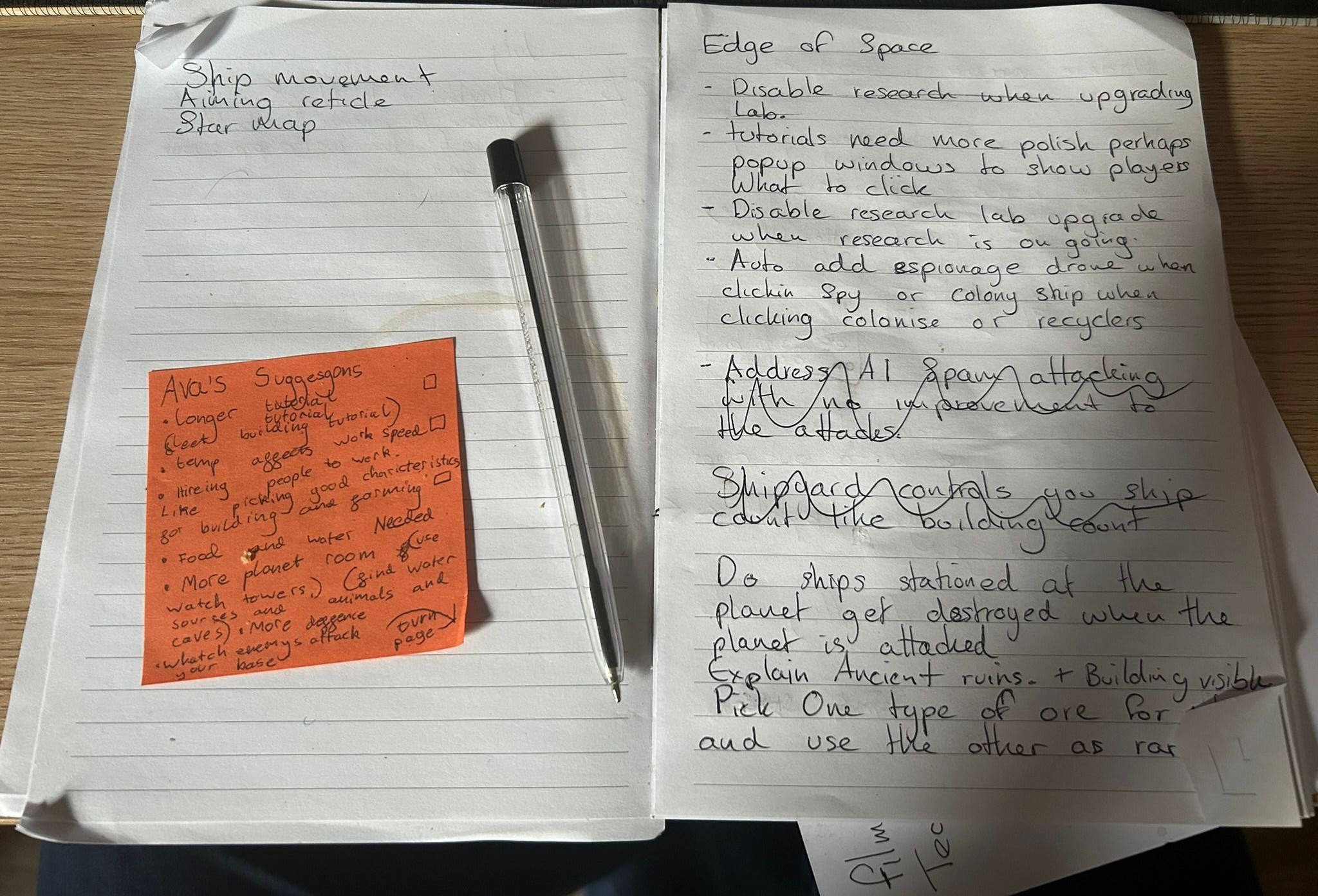
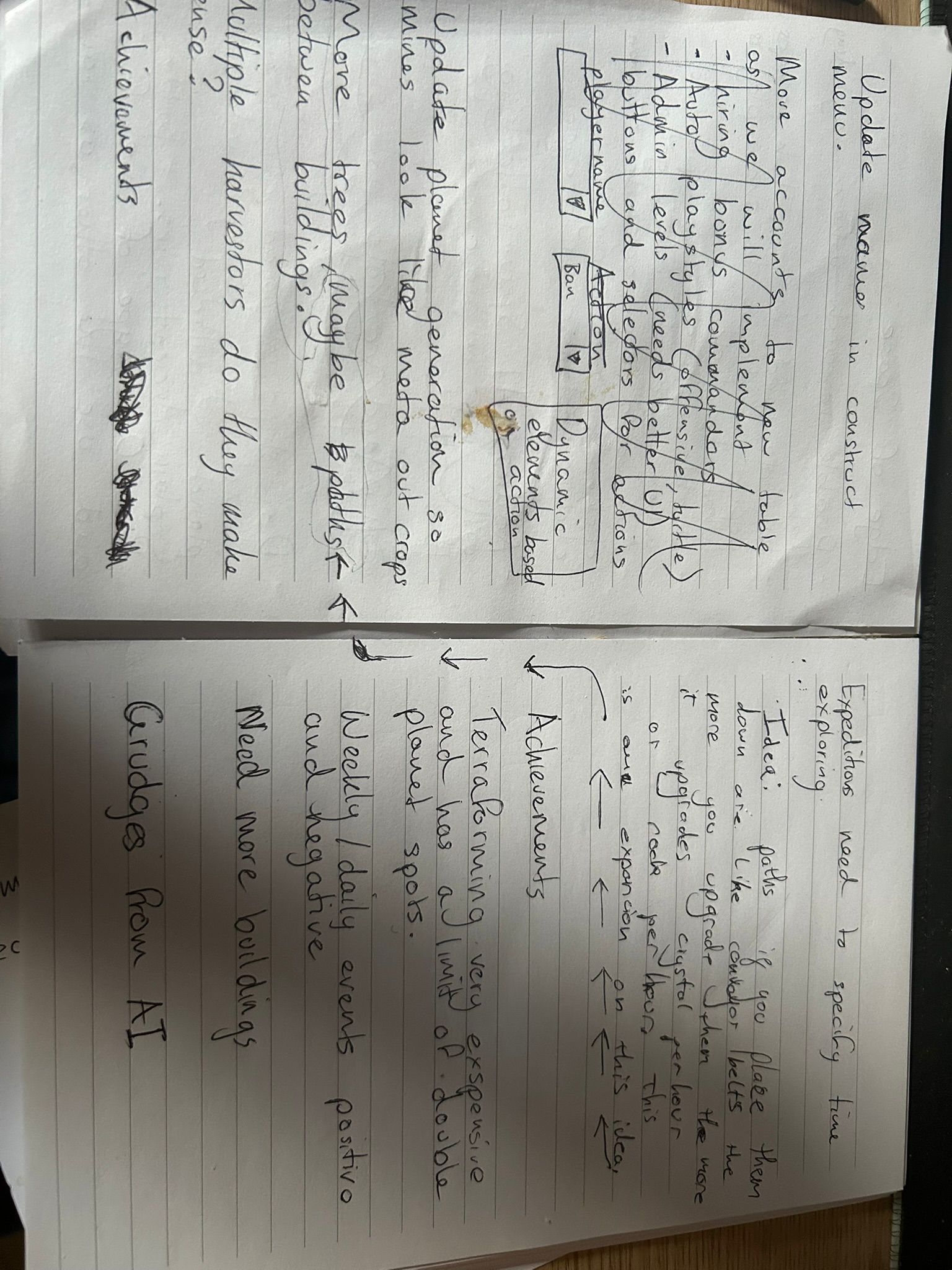
As you can see this is not an effective approach to game development, I needed to write it all down properly in order and so I eventually decided to bite the bullet and create a game design document.
So what goes into a game design document? On the first layer of it I would recommend you write out everything you want the game to be and then use the MoSCoW method (Must-have, Should-have, Could-have, and Won't-have) to go through each one and ensure all are categorised. With any project scope creep is the one to watch, I'm not saying don't add that feature you just thought of but categorise it correctly and when the time comes you can go through those features and create them.
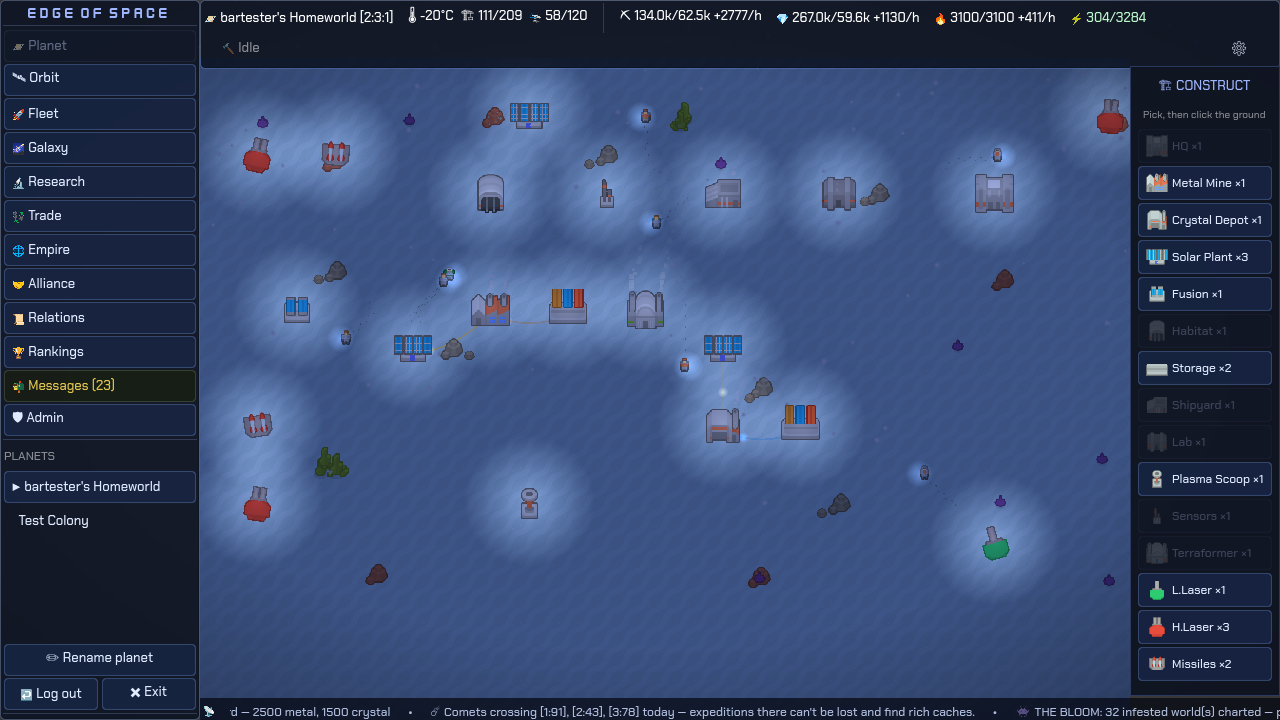
This is the first post of a series. Next time: what actually went into that design document , the systems map of Edge of Space and the handful of numbers that secretly run the whole game.
For now, here's what the scribbles eventually became.
You can play Edge of Space for yourself at eos.simontasker.co.uk.